Empowering Property Management: A DevOps Journey
2/7/2024 • VirtueCloud
Introduction
In the ever-evolving landscape of technology, information, and the internet, Our client is at the forefront, reshaping how real estate agents and homeowners navigate the complexities of presale preparations. With a profound understanding of the challenges in this phase, They offer a cutting-edge platform designed to optimize property value and streamline the presale process, making it simpler and stress-free.
Overview
Their transformative platform addresses key pain points in presale preparations, revolutionizing how the real estate industry approaches property enhancement. From requesting personalized remote quotes within 72 hours to empowering agents with comprehensive tools, This platform is more than a service; it's a collaborative partnership unlocking the genuine potential of every home. The platform's unwavering focus on efficiency and expertise has garnered the trust of agents industry-wide, marking a paradigm shift in the presale landscape
Challenges
- No Auto Scaling: They struggled with scalability issues in their infrastructure, relying on manual adjustments to meet fluctuating workloads. This led to inefficiencies and potential downtime during peak traffic.
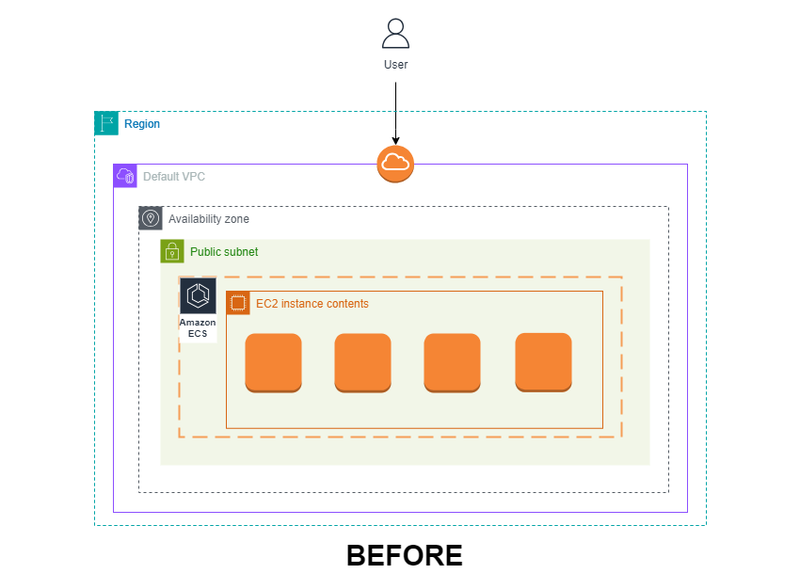
- Public ECS-EC2 Instances: Instances with exposed public IPs posed challenges, especially when IPs changed due to shutdowns. This disruption affected third-party API access, impacting outbound IPs.
- Migration from Gitlab to Github: The migration introduced complexities in code and repository management, necessitating a seamless transition without disruptions to ongoing projects.
- Manual Software Release Processes: The absence of a CI/CD pipeline resulted in manual and error-prone deployment processes, hindering efficient software releases.
- Lack of Automation in Resource Provisioning: The absence of infrastructure-as-code (IaC) tools like Terraform impeded efficient infrastructure provisioning and management.
- Single AZ Infrastructure: Infrastructure deployed in a single Availability Zone posed a single point of failure risk, limiting high availability.
Solutions Implemented
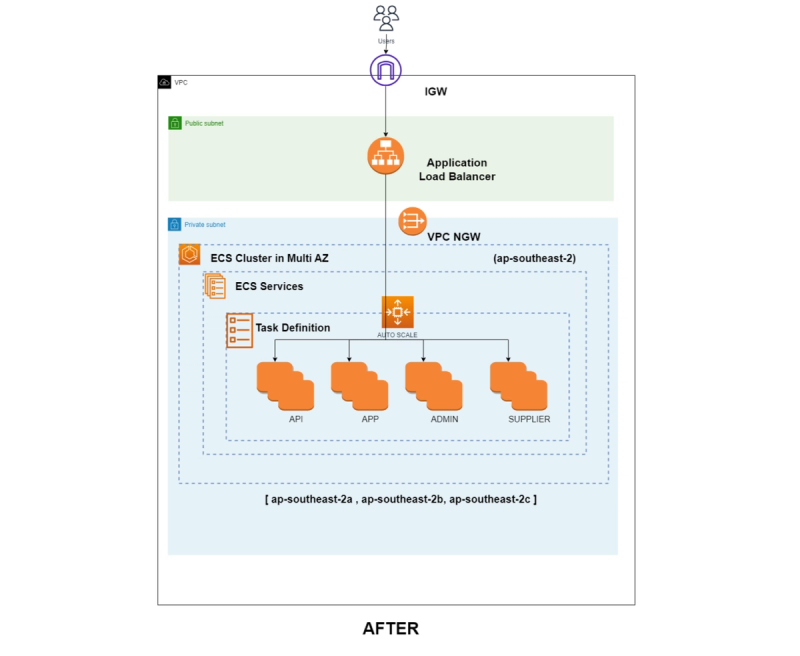
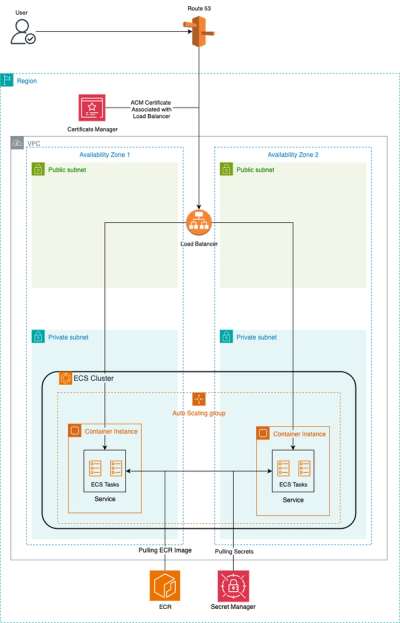
- Custom VPC and Multi-AZ Deployment: Created a custom Virtual Private Cloud (VPC) for enhanced network isolation and security.Implemented a multi-Availability Zone (AZ) deployment for improved fault tolerance.
- Load Balancer and ECS-EC2 Instances with Auto Scaling: Introduced load balancing for even traffic distribution and high availability.Utilized Amazon Elastic Container Service (ECS) with EC2 instances and enabled auto-scaling for dynamic resource adjustments.
- Terraform Setup with S3 Backend: Established a Terraform infrastructure-as-code (IaC) setup for automated infrastructure provisioning.Utilized Amazon S3 as a backend for Terraform state files, ensuring consistency and collaboration.
- Complete CI/CD Setup using Github Actions: Implemented a comprehensive CI/CD pipeline using Github Actions for automated build, test, and deployment processes.Enabled seamless code integration and continuous delivery.
- AWS Secrets Manager for Enhanced Secrets Protection: Leveraged AWS Secrets Manager for secure storage and management of sensitive information.
Results and Benefits
- Auto-scaling capabilities ensured efficient resource allocation, eliminating the need for manual adjustments.
- Multi-AZ deployment enhanced network security, high availability, fault tolerance, and improved performance.
- Custom VPC ensured isolation, access control, compliance, and privacy.
- The introduction of load balancing improved application availability and reliability.
- Terraform's adoption streamlined infrastructure provisioning and management.
- A complete CI/CD pipeline reduced manual errors and accelerated software delivery.
- Reduced build and deployment time by 80%, ensuring effective cost savings.
- Secrets management using AWS Secrets Manager enhanced data security.
Technology and Tools Used
- Amazon Web Services (AWS): Utilized AWS services, including Amazon EC2, ECS, S3, and AWS Secrets Manager.
- Terraform: Leveraged Terraform for infrastructure-as-code (IaC) automation.
- Github Actions: Implemented Github Actions for comprehensive CI/CD automation.
- AWS Secrets Manager: Enhanced security and secrets management using AWS Secrets Manager.
- Amazon Elastic Container Service (ECS): Deployed applications within Docker containers using Amazon ECS.
- Amazon Elastic Compute Cloud (EC2): Utilized EC2 instances within the ECS architecture for hosting and running applications.
- Amazon S3 as a Backend for Terraform: Chose Amazon S3 as the backend for Terraform to store and manage state files.
- Application Load Balancer: Introduced load balancing using AWS Load Balancer services.
- Multi-Availability Zone (AZ) Deployment: Designed and deployed the infrastructure across multiple AWS Availability Zones.
- Custom Virtual Private Cloud (VPC): Implemented a custom VPC architecture for network isolation, security, and control.
- Github for Code Repository Management: Managed code repositories and version control using Github.
Conclusion
In conclusion, Their DevOps journey has not only addressed their immediate challenges but has paved the way for a more robust, scalable, and secure IT infrastructure. The strategic solutions implemented have not only resolved existing issues but have also positioned them for future growth and innovation. By addressing challenges head-on, They have paved the way for a future where presale preparations are seamless, stress is minimized, and every property is primed to shine.
Also Read
Related articles you might find interesting
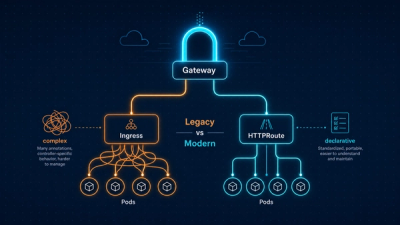
Ingress Got You This Far — A Field Guide to Gateway API & HTTPRoute
Why platform teams are re-routing north-south traffic through the Kubernetes Gateway API, what HTTPRoute changes on the ground, and how to migrate without a big-bang rewrite.
AWS Graviton: High-Performance Compute with Energy Efficiency and Cost Savings
Automated ECS Deployment: Fargate or EC2, Make it easy with VirtueCloud
Hassle-Free ECS: Terraform Automation + CI/CD Pipeline